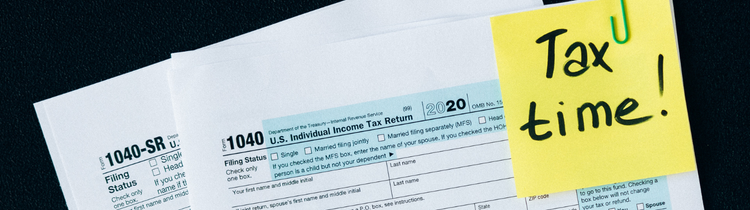
Considering selling your home in Chicago? Before finalizing your property sale, there’s a critical element many homeowners overlook: potential tax implications. If you’ve earned a profit from your property sale, you may owe capital gains taxes to the IRS. Understanding these tax regulations can help you minimize your financial obligations and avoid unexpected costs. Let’s explore what you need to know about tax considerations when selling your older home in Chicago.
The Likelihood of Paying Taxes on the Sale of Your Home
With Chicago‘s real estate market experiencing significant appreciation, particularly in neighborhoods with older, character-rich homes, selling your property could result in a substantial financial gain. However, this windfall may come with tax responsibilities. Since your home is considered an asset by the IRS, any profits from its sale could be subject to capital gains taxes, especially if you’ve owned it for several years and it’s increased in value.
“The biggest question at tax time for someone who recently sold a home is whether they’ll have to pay federal capital gains taxes on the profit. In short, capital gains are the amount of money you make from selling capital assets – property like homes, cars, investments, and other high-value items.”
It’s worth noting that home values in Chicago and surrounding suburbs have increased dramatically in recent years, especially in neighborhoods with older homes that often face unique challenges like city code violations. This means your property has likely experienced significant appreciation, which could trigger tax obligations without proper planning when you decide to sell.
How Capital Gains Taxes Work
Now, let’s examine how capital gains taxes work and how they apply when selling your home.
“A capital gains tax is a tax placed on any profits earned when a capital asset is sold. The IRS considers almost everything you own and use for personal or investment purposes to be a capital asset. These taxes are due on the tax deadline after the asset is sold, and it applies to investments like stocks, bonds, and real estate.”
The IRS classifies capital asset gains into two categories: short-term and long-term. For Chicago homeowners, if you’ve lived in your property for less than a year, you’ll have a short-term gain. If you’ve owned and lived in your home for a year or longer, the gain is considered long-term. When selling your home, “the capital gains tax depends primarily on how long you’ve owned the home and your income.”
“If you have a short-term gain, you’ll be taxed at whatever your normal tax bracket is. A long-term capital gain gets preferential tax treatment and is taxed at a rate of 0%, 15%, 20%, or 28%. These rates vary according to your income and tax filing status. . . . And if you meet certain conditions, you can exclude the first $250,000 to $500,000 from the sale of your home and avoid paying taxes on it altogether.”
How to Avoid Capital Gains Tax
While you may face capital gains taxes when selling your Chicago home, especially properties with significant appreciation or those where city code violations have been resolved, the IRS does allow certain exclusions that many homeowners qualify for, providing financial relief during the selling process.
According to industry experts, “[i]f you meet certain requirements, you can exclude $250,000 from the sale of your home. That number increases to $500,000 if you’re married and filing jointly.”
To qualify for such an exclusion when selling your Chicago-area home, you’ll need to meet these specific criteria…
- “You’ve owned the home for at least two years during the past five years prior to the sale (this doesn’t have to be continuous). If you’re married and filing jointly, only one spouse needs to meet this requirement.”
- The home was your principal residence for a minimum of two of the five years prior to the sale. For those married and filing jointly, both spouses must meet this requirement.
- “You haven’t sold another home during the two years before the sale, or — if you did — you didn’t take the exclusion of gain earned from it.”
If you believe you may qualify for these exclusions, it’s worth consulting with our bilingual Chicago real estate team at CVG Properties LLC. We specialize in older homes with unique challenges and understand both property values and tax implications, especially for properties with code violations. For clear, straightforward guidance without industry jargon, call 312-625-6506.
Special Circumstances
Even if you don’t meet the standard criteria outlined above, you may still qualify for a full or partial exception when selling your home in Chicago, particularly if you’re facing challenging circumstances like foreclosure or tight timelines. Special qualifying situations include…
- Gaining ownership of the home during a separation/divorce
- If your spouse died during your ownership of the home
- Owning a “remainder interest” in the home when selling
- Having your previous home condemned
- Being a service member during your ownership of the home
- Releasing the home in a “like-kind” exchange
Calculating Capital Gains Tax
When selling your Chicago home, especially an older property that may have required renovations or code compliance updates, calculating your potential capital gains tax requires determining the cost basis for your property. This is particularly relevant for homes with city ordinance violations that our experienced team at CVG Properties can help resolve before they delay your sale.
The cost basis includes what you spent to buy the home, as well as any money spent on improvements over the years. “For instance, if you purchased a home for $300,000 and spent $50,000 on home improvements, your cost basis is $350,000.”
“From there, you can add up the purchase price of the home, minus certain fees you paid for things like closing costs and the services of a real estate agent. Then you can subtract your cost basis from any money you earned from the sale.” This will yield the amount subject to capital gains tax.
Get Professional Assistance
Navigating capital gains taxes can be particularly complex for homeowners dealing with older properties or code violations in Chicago neighborhoods. As the only local cash home buyer with a fully bilingual team, CVG Properties LLC specializes in helping homeowners with unique property challenges and tight timelines. We understand both the market and local regulations, handling city violations that might otherwise delay your sale while providing transparent guidance on potential tax implications. If you’re concerned about taxes when selling your property, especially one with code compliance issues, contact us at 312-625-6506 for friendly, no-jargon advice with absolutely no surprises.